
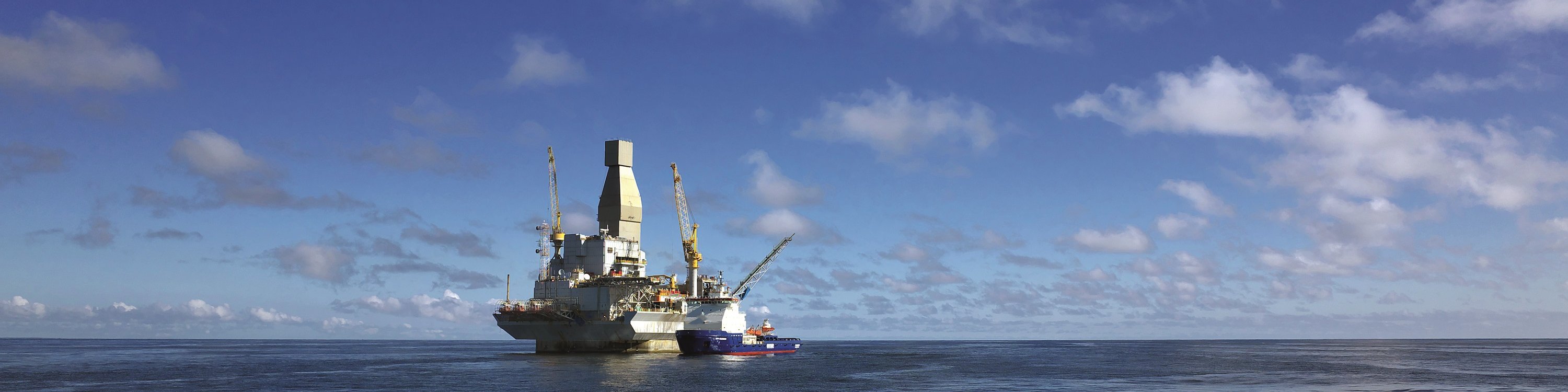
How R. STAHL TRANBERG is Meeting the Digitalization Demands of the Future in the Maritime Sector
DOI: 10.60048/exm20_13Digitalization and the Maritime Industry’s Key Drivers
Digitalization and the integration of data and solutions is playing a pivotal role in the shipping and maritime industries today, having a major impact on costs, availability and performance efficiencies.
The need to reduce costs and remain competitive in what is a highly competitive and often economically uncertain environment is crucial to shipping and maritime operators today. Furthermore, not only does greater automation and digitalization mean reduced costs but there is also an increased focus on the need to keep ships and offshore infrastructures productive and in operation with a minimum number of personnel while adhering to the highest safety standards.
This is where areas such as remote control operations and preventative maintenance come to the forefront with a need for greater intelligence and integration within and between critical components so that maintenance and safety requirements can be predicted with high levels of confidence.
The focus on fuel efficiencies and reducing carbon emissions is also a key driver in the maritime sector today with a strong climate-friendly business model and reduced environmental footprint becoming a key differentiator.
Finally, there are performance efficiencies. The 2018 Review of Maritime Transport by the United Nations Conference on Trade & Development (UNCTAD) cited technological advances, such as artificial intelligence, the Internet of Things, and autonomous ships as having the potential to significantly “boost efficiency in the global shipping industry.” Many maritime and shipping organizations are looking to make this a reality.
R. STAHL TRANBERG – Supporting Maritime Customers in the Digital Age
It’s against this backdrop that we at R. STAHL TRANBERG has positioned itself to support maritime customers in the digital age.
Facing a choice on whether to remain commodity-driven focusing on standalone products or to prioritize an integrated, digital environment where every component is just one part of a full information ecosystem, R. STAHL TRANBERG has chosen the latter.
This article will show examples of how this has manifested itself as R. STAHL TRANBERG seeks to help define and be part of the conversation when it comes to the digital shipping and maritime demands of the future.

Supporting The OpenBridge Consortium
One of the biggest advances when it comes to digital shipping is on the ship’s bridge.
Whereas previously such bridges were characterized by a raft of different suppliers and interfaces with individual implementation requirements and considerable opportunities for human error, today there is a greater integration of components.
One driver for this greater integration is the Norway-based OpenBridge consortium – of which R. STAHL TRANBERG is a key member – whose goal is to develop an open platform that provides better and safer user interfaces on ships, simplifies multi-vendor integration and opens the ship bridge for new applications.
The consortium, which consists of 27 partners, includes many of Norway’s leading maritime companies, with research carried out by Ocean Industries Concept Lab at the Oslo School of Architecture and Design, research institute SINTEF Ocean and the University of South-Eastern Norway.
R. STAHL TRANBERG will use OpenBridge as a platform for future product development and the refining of existing products as well as the designing of new systems. Without OpenBridge and its goal of creating a modern and intelligent maritime design system, the industry and R. STAHL TRANBERG wouldn’t be in as strong a position to roll out our digital, interconnected solutions. It’s that important and has been a highly effective platform for the sharing of information and building of applications. R. STAHL TRANBERG is delighted to be involved.
Bring Greater Digitalization and Integration to Lighting - The BlueLine Series
Yet, it is not just as part of industry consortiums that R. STAHL TRANBERG is embracing the digital shipping and maritime demands of the future but also in its own solutions. There are a few better examples of this than the TRANBERG® BlueLine Lighting series.
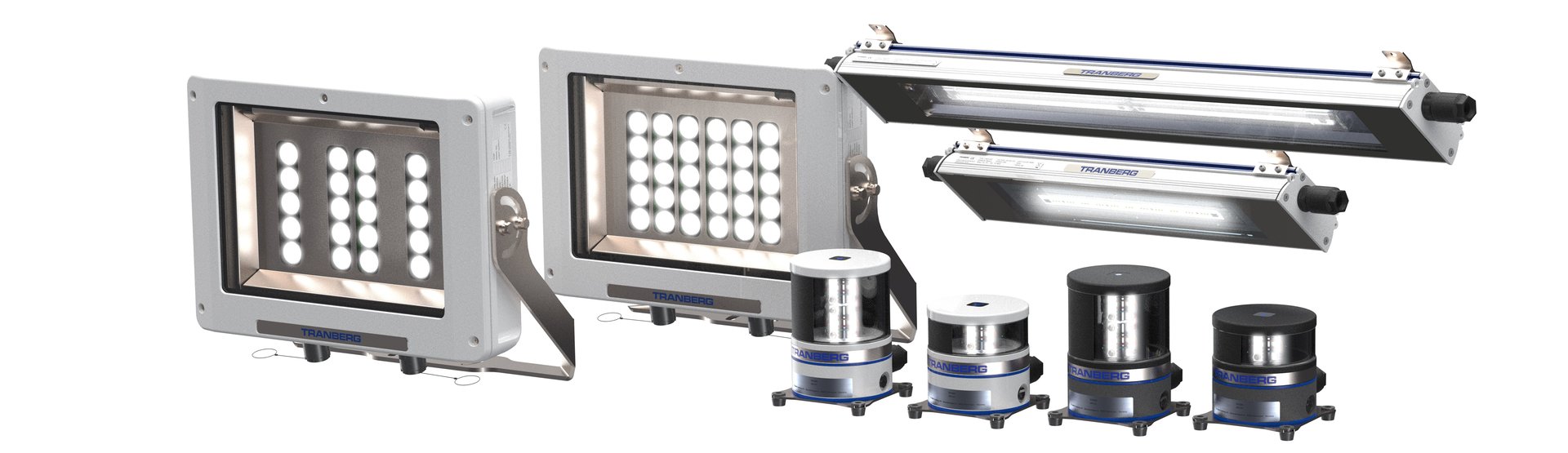
The series includes navigation lights, floodlights and deck lights for all types of vessels that have been designed to meet the growing demand for remote control and sustainable systems – so crucial to the autonomous and digitally-enabled ships of the future. Key features of particular lights in the new series include seamless integration, simplified plug and play, modular designs for ease of installation, and unmatched availability. Furthermore, the lights come with the highest levels of sustainability with new streamlined lighting designs that have smaller environmental footprints, 100% LED lighting, and the ability to be easily upgraded to leverage future LED lighting advances. In the case of the navigation lights, their self-monitoring capabilities lead to significantly reduced CAPEX and OPEX.
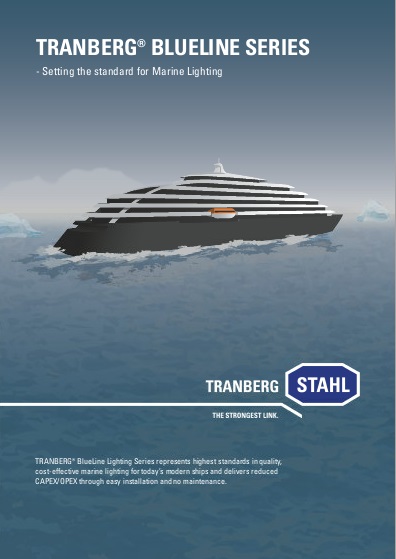
One recent development in the series consists of the BlueLine Deck Light, with easy, safe and cost effective installation through fast ‘plug and play, no maintenance and reduced costs through a sealed for life solution, and a modern and simplified low build, slim design – perfectly aligned with modern ship designs.
However, it’s from an integration and digitalization perspective that the BlueLine Lighting series is likely to have its greatest future impact, signalling greater compatibility with existing and future control systems and the ability to maximize future intelligent connectivity – the development of a series of lights ideally suited to the digital age.
Building on R. STAHL TRANBERG’s history, reputation and the work we are currently doing in supporting autonomous ships, we see the BlueLine Lighting Series as representing the very best in cost-effective, next generation marine lighting now and for many years to come.
Recent orders for the BlueLine Lighting Series include the Astilleros Balenciaga S.A. Shipyard, one of Spain’s best known privately owned shipyards which builds steel hull ships, tugboats, offshore support vessels, fishing vessels, cargo vessels and product carriers.
Digitalization and Safety – Integrated Helideck Lighting
Great integration and digitalization can also have a positive impact on safety, as demonstrated by R. STAHL TRANBERG’s helideck lighting portfolio.
When it comes to helicopter pilots landing and taking off from offshore infrastructures, safety is of paramount importance. That’s why on May 15th 2019, the Norwegian Aviation Authority issued new product requirements for helideck lighting packages as part of NORSOK C-004:2019, 19.1 with the new standards required to be met by January 1st 2021.
According to NORSOK C-004:2019, 19.1, all helidecks must be suitably lit for operations at night and under reduced visibility and pilots “on approach should be able to identify the helideck and have a clear view of the helideck landing area”. Part of the new required standard is what is known as the Status Light System (§36.c) – where all helideck lighting packages must warn helicopter pilots of any situation onboard which could pose a risk to flight operations.
With this in mind, R. STAHL TRANBERG has ensured that its helideck lighting solutions meet the new Status Light System standards with the goal being an instant warning to pilots of any dangerous situations on deck alongside the Helicopter Landing Officer (HLO)’s communications.
This has been achieved through adopting a digitally-enabled, integrated helideck lighting solution that connects helideck monitoring systems (HMS) and alarms. The solution provides instant warning to the pilots of any dangerous situations on deck with integrated communications between status lights, alarms systems and the helicopter pilot. The lighting is also designed to be visible from all approach angles as well as when the helicopter is on the helicopter deck –both issues that the Norwegian Aviation Authority insists upon.
The solution also utilizes a bright red flash to alert pilots to dangerous situations automatically triggered through a Fire & Gas (F&G) alarm or if the asset is exceeding motion limits. This is achieved by connecting the Status Light System to the HMS – either through a simple 24V signal or a fully integrated Modbus TCP/IP. The system also comes with flexible control options so it can be manually activated or deactivated by the HLO and is connected to an uninterrupted power supply (UPS).
The result is a fully integrated and digitally-enabled approach that meets the safety demands of the maritime sector as well as perfectly aligning with R. STAHL TRANBERG’s philosophy of prioritizing the integrated digital environment and a full information ecosystem over a single, product-focused approach.
Furthermore, the examples above are just a taster of R. STAHL TRANBERG’s embracing of greater digitalization. In its’ de-icing solutions, for example (so crucial for safety in the case of needing to launch lifeboats, for example), R. STAHL TRANBERG has installed the latest software and power efficient systems to ensure the immediate de-icing of critical components.
Yara Birkeland - The World’s First Autonomous Vessel
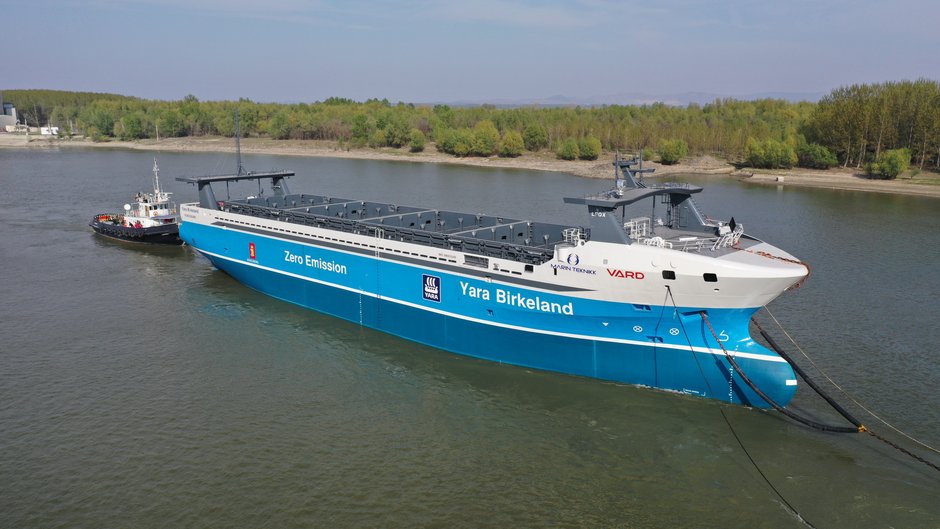
R. STAHL TRANBERG’s solutions are also being seen in real-world applications, one example being the Yara Birkeland, the world's first autonomous and zero-emission container vessel where the controlling of the ship will take place from land.
In this case, KONGSBERG is responsible for the development and delivery of all key enabling technologies including the sensors and integration required for remote and autonomous ship operations, in addition to the electric drive, battery and propulsion control systems. R. STAHL TRANBERG is partnering with KONGSBERG to roll out its lighting solutions as part of the digital ecosystem.
The Yara Birkeland is likely to be just the start of the growing development for unmanned and hybrid vessels where onboard crews are to a large extent replaced with onshore teams who serve multiple vessels. In preparing for these advances, many of R. STAHL TRANBERG’s solutions have strong remote monitoring capabilities with the company working closely on current, high profile unmanned vessel projects.
The future
So what of the future? One such development is the growth in technology companies who are driving digitalization.
With their economies of scale and infrastructure across the world, we are quite literally seeing the ‘Googles of the marine world.Such technology companies not only have vast storage capabilities but can also take care of the cyber security implications across the maritime and shipping sectors. New cloud technologies, storage and data platform developments will have a dramatic effect on how such industries manage information, and how vessels and their components are designed, built and tested in the future.
What is clear though is that digitalization has only just begun in the shipping and maritime industries with the next few years likely to see continuing transformations as new technologies, such as machine learning and remote control vessels, become more prominent.
Whatever the direction the industry takes, R. STAHL TRANBERG is likely to be playing an important role.
More Article
Certification of Ex products
Since 1st October 2019, new CCC certification rules have been in place for Ex products sold in China
LNG - The key energy source in the medium-term on the way to…
LNG stands for Liquefied Natural Gas and refers to natural gas that liquefies as it deep-cools to -162 °C and thereby shrinks to 1/600 of…
Competence and competencies in explosion protection
The field of explosion protection requires people who are able to respond competently, i.e. by choosing the correct course of action, in…
R. STAHL TRANBERG plays crucial role in world's first autonomous…
![[Translate to Englisch:]](/fileadmin/_processed_/2/8/csm_Yara_Bireland__Zero_Emission_d0e5ff95d4.jpg "[Translate to Englisch:]")
Remote control monitoring capabilities, situational awareness and resilience of R.STAHL TRANBERG’s navigation and search lighting key to…
The digital type plate in the era of Industry 4.0
![[Translate to Englisch:]](/fileadmin/_processed_/a/a/csm_Dig_Typenschild_Key_visual_quer_08c297ea4e.jpg "[Translate to Englisch:]")
A type plate contains essential information about a product, such as the manufacturer, product name and type, serial number and year of…
Power that never ends
![[Translate to Englisch:]](/fileadmin/_processed_/b/3/csm_Bild_13_USV_ADNOC_Offshore_Power_ohne_Ende_b07a7a5681.jpg "[Translate to Englisch:]")
Offshore platforms providing crude oil and natural gas require sufficient electrical energy in a continuous supply in order to guarantee…
Lithium-ion batteries for use in explosion protection
![[Translate to Englisch:]](/fileadmin/_processed_/b/c/csm_Lithium-Ionen_Akkus_Abbildung_7_3b0a489a32.png "[Translate to Englisch:]")
The advent of the digital revolution (industrial Internet of Things) has opened up new avenues for reducing costs and increasing system…
Explosion protection and digitalisation for automation

The digitalisation trend is showing no signs of slowing. The process automation sector is also working on this topic across a number of…